

SaaS Migration
From Vendor Dependency to Software You own
You chose SaaS because it was the smart decision. Fast to deploy, predictable costs, no development effort. That promise held. What changed is the calculation - building custom software that fits your exact processes is no longer the expensive option it used to be.
We help businesses move away from SaaS that -
- forces their processes to adapt to the tool, not the other way around.
- charges for features nobody in the company actually uses.
- puts the vendor's roadmap in control of their IT strategy.
- raises prices every year without improving what matters.
- has become a constraint instead of a tool.
You'll recognise some of this:
The problem isn't the vendor.
It's the assumption that a standard tool can fit your processes.
Every SaaS product is built for the broadest possible market. It covers the common denominator, not your specific logic. Customisation is possible but limited and the more complex your processes, the bigger the gap between what the tool can do and what you actually need. What used to make custom software unrealistic was cost and time. AI has changed that calculation. Development cycles are shorter, complexity becomes visible earlier, and the point at which a custom solution becomes more economical than a licence is now significantly earlier than it was three years ago.
What SaaS actually costs
beyond the monthly invoice:
How we run a SaaS migration - The same five-phase approach: applied to moving off a platform you no longer own.
We start by mapping your actual processes, not what the SaaS tool currently does, but how your business actually works. Business logic locked inside workarounds, Excel files, and manual steps gets documented before anything changes. This is the foundation every decision builds on.
We design the replacement around your real requirements, not a feature-for-feature copy of the SaaS tool. This is the opportunity to get rid of workarounds and build the system your processes actually need. We deliver a PoC or MVP early for validation.
We produce a migration plan based on dependencies and modularisation. The goal is always to migrate without breaks in service - no big bang, no cutover weekend where everything might fail. We fine-tune the plan with your operational reality.
We build using SmartCode - 3 to 7x faster than conventional development. Components are generated from designs, releases are frequent and controlled, and open standards prevent new vendor lock-in from emerging on the other side.
After migration you own the system. We offer ongoing support, monitoring, and development, but the codebase is yours, documented, and maintainable by any competent team. You're never dependent on a single vendor again.
In practice, not just on paper
"We've been working with Beyonder since September 2023 and couldn't be happier. Both the app and the management system were delivered in a structured, reliable way and to a high professional standard. What we particularly value is the open communication, fast response times, and flexibility when last-minute changes come up."
- Constantin Behr, Product Owner & Board Member, Golden Gates
Not sure if the numbers add up yet?
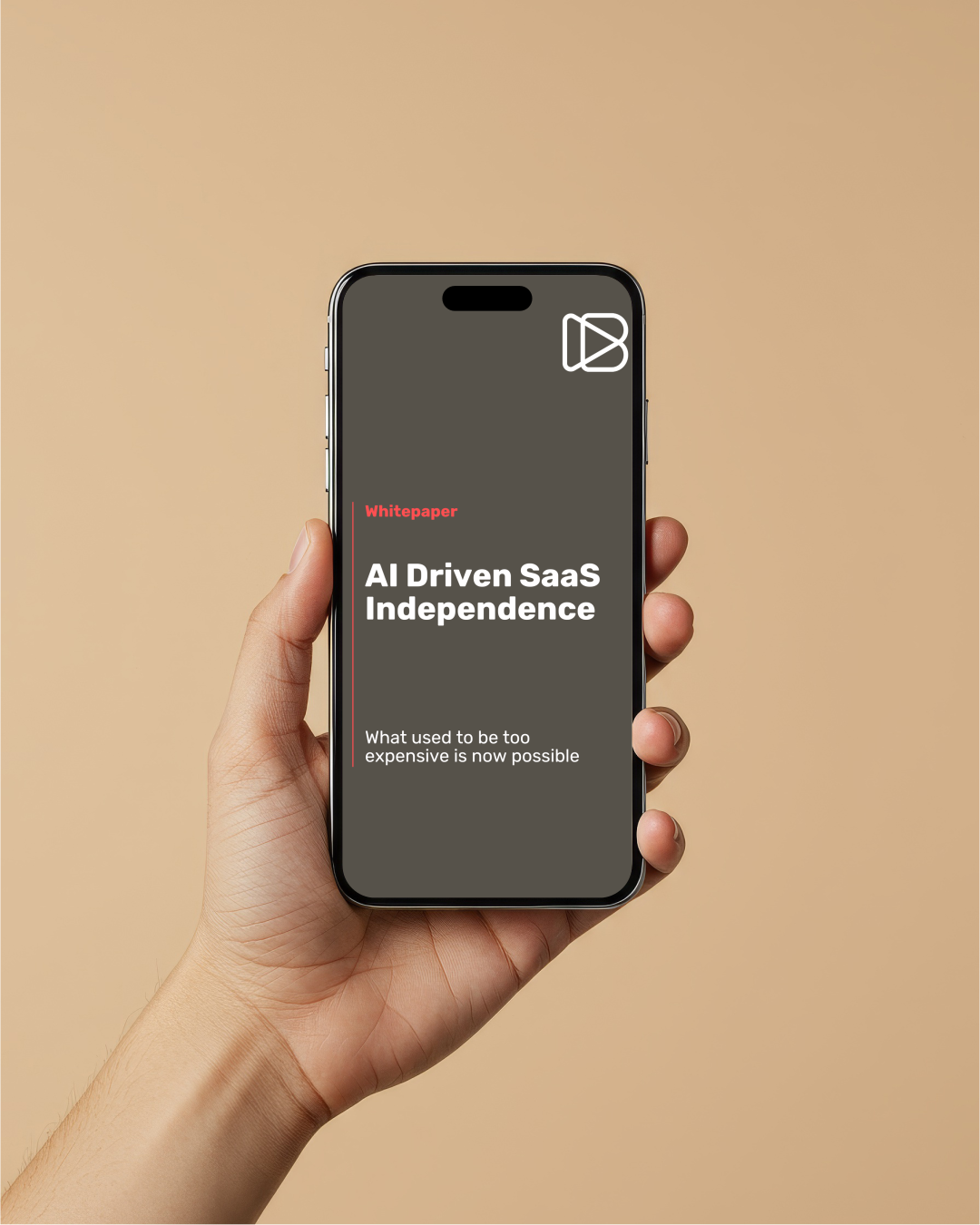
Our whitepaper on AI-driven SaaS independence walks through why SaaS becomes a cost trap, how the economics of custom software have fundamentally changed, and how to calculate whether moving off a platform makes sense for your business - before you commit to anything.
Related services
Let's assess your software landscape
Not every SaaS tool needs to be replaced. Some are the right choice and will stay that way. Tell us which tools are creating friction, where your processes have been compromised, and what the licence cost looks like. We'll tell you honestly where custom software makes a structural difference and where it doesn't.


Free 30-minute consultation
We'll look at your current tool landscape, where the gaps are, and what a realistic migration path would actually involve. No commitment required.
SaaS Migration - the honest answers.
Not every SaaS tool should be replaced - that's the starting point. We assess which tools are creating genuine friction: where processes have been compromised to fit the tool, where licence costs no longer justify the value, and where custom software would provide a real strategic advantage. SaaS continues to make sense for many standard functions. We tell you which ones.
We design the migration to avoid disruption from the start. That means incremental cutover - running the new system alongside the old one, migrating data and workflows in stages, and only decommissioning the SaaS tool when the replacement is proven stable. No big bang, no high-risk cutover weekends.
Data migration is part of every project. We assess your current data structure early, SaaS platforms vary significantly in how they allow data to be exported, and this affects both timeline and migration approach. We plan around what's actually there, not what the vendor's documentation says should be there.
That's a fair concern and one we take seriously. We build using open standards, document the codebase thoroughly, and structure everything so any competent development team can maintain and extend the system. You own the code. We offer ongoing support because clients find it valuable, not because we've made it necessary.
A focused migration of a single tool with a clear scope can be completed in 3 to 6 months. A broader migration involving multiple interconnected tools typically takes 9 to 18 months, depending on integration complexity and how much of the business depends on the systems during transition. We scope before estimating.
Almost always start with one: the tool where the pain is clearest and the scope is most defined. A successful first migration builds confidence, generates reusable architecture, and gives you a realistic picture of what subsequent migrations will involve. We help you choose the right starting point based on impact and feasibility, not on what's easiest to build.